
What to think about when choosing your wedding cake flavours?
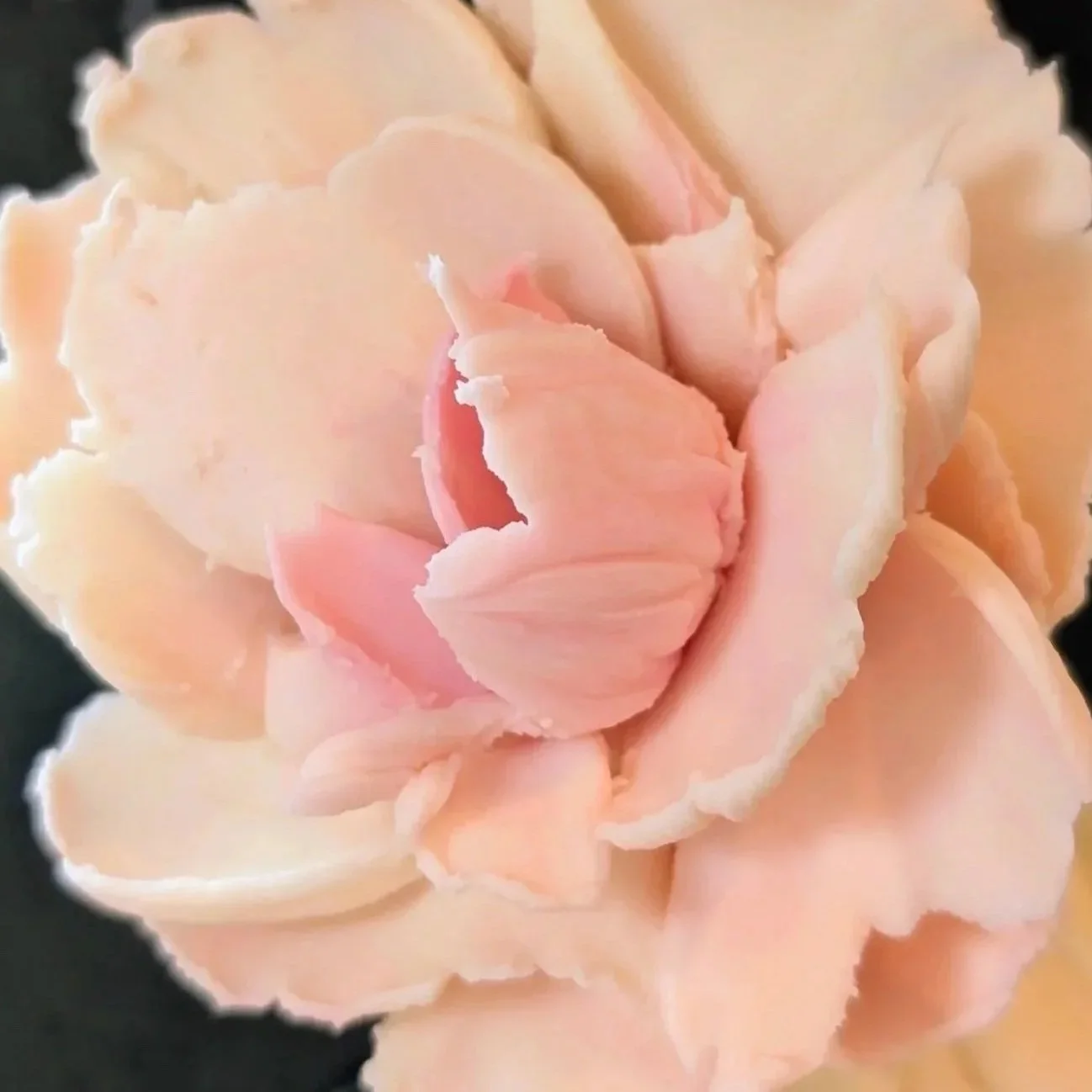
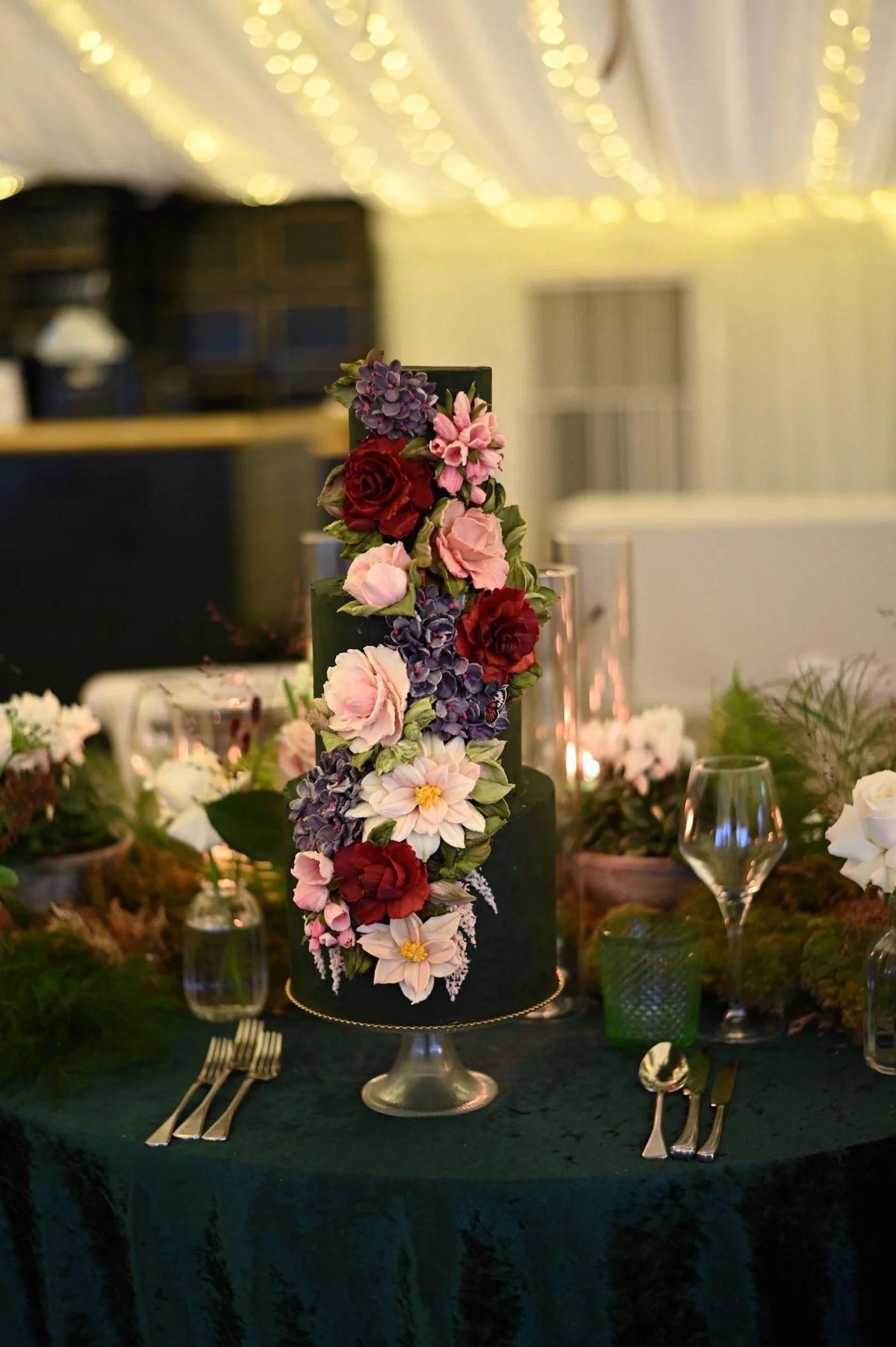
Of all the decisions you’ll make about your wedding cake, flavour is the one your guests will actually experience. The design catches the eye. The florals start the conversation. But it’s the first bite that people remember, the moment the cake stops being a beautiful object and becomes something personal, generous, and shared.
Choosing your wedding cake flavours deserves more thought than most couples give it, and not because it’s complicated, it isn’t, but because a little consideration at this stage makes the difference between a cake that tastes nice and one that feels like it was designed for your wedding and no one else’s.
Here’s what’s worth thinking about.
You don’t have to choose just one flavour
This is the thing that surprises couples most often: if your wedding cake has more than one tier, each tier can be a different flavour. And honestly, it should be.
A multi-tier bespoke wedding cake is one of the very few moments in a meal where you can offer your guests genuine variety without any additional complexity in the serving. Your caterers cut and plate each tier, and suddenly your guests are choosing between Earl Grey and orange blossom, Persian Love Cake, and triple chocolate – rather than simply receiving a slice of vanilla.
Different flavours across tiers also solve a practical problem: not everyone likes the same thing. Your aunt who finds chocolate too rich gets the lemon and elderflower. Your best man who thinks fruit cake is the only real wedding cake discovers the champagne and rhubarb and changes his mind. Everyone finds something they love, and nobody politely leaves half a slice on their plate.
When couples order a tasting box from me, I always suggest choosing six different flavours from across the collection. It’s the best way to discover combinations you’d never have considered, and it’s where some of the most interesting decisions get made.
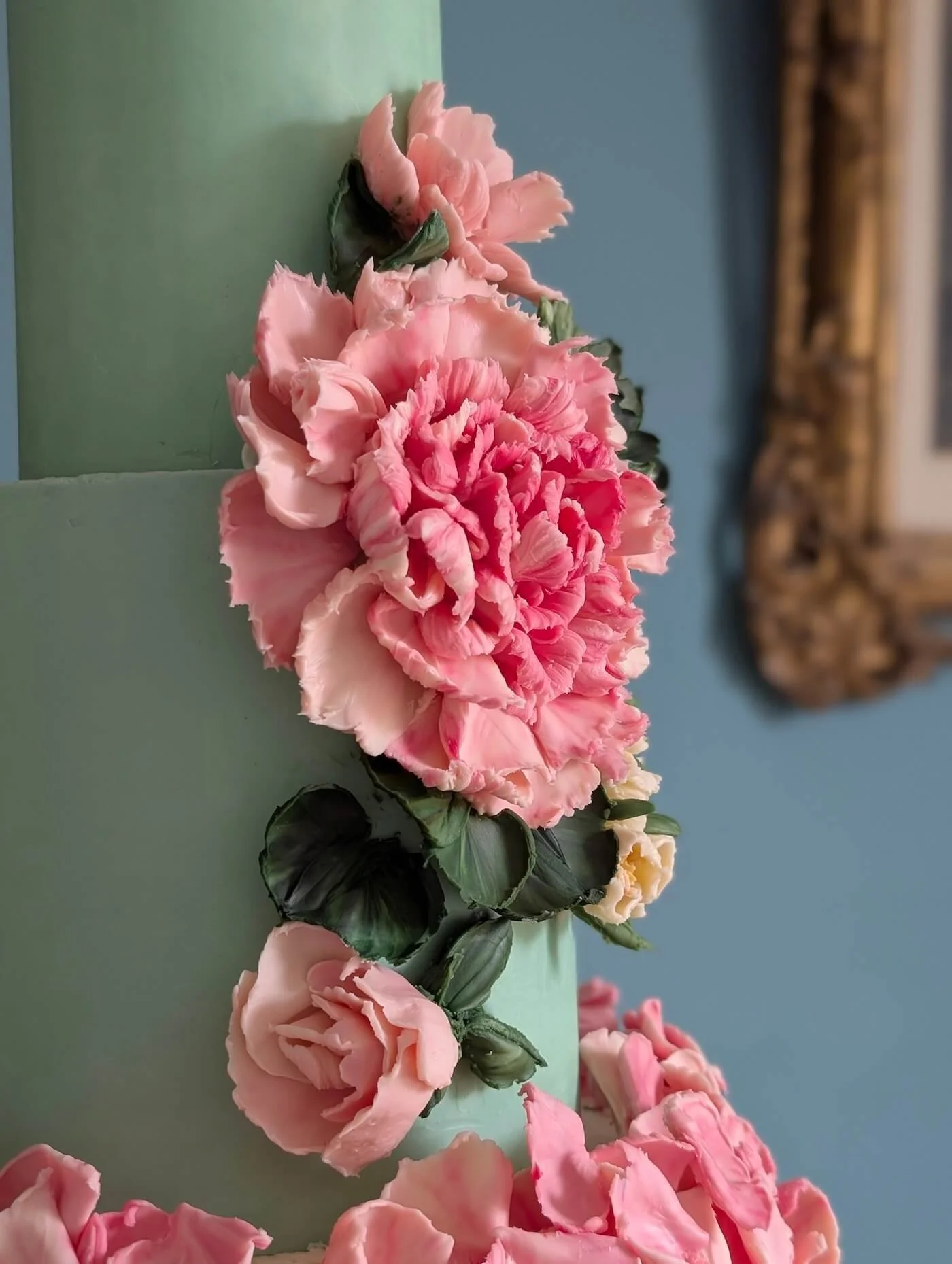
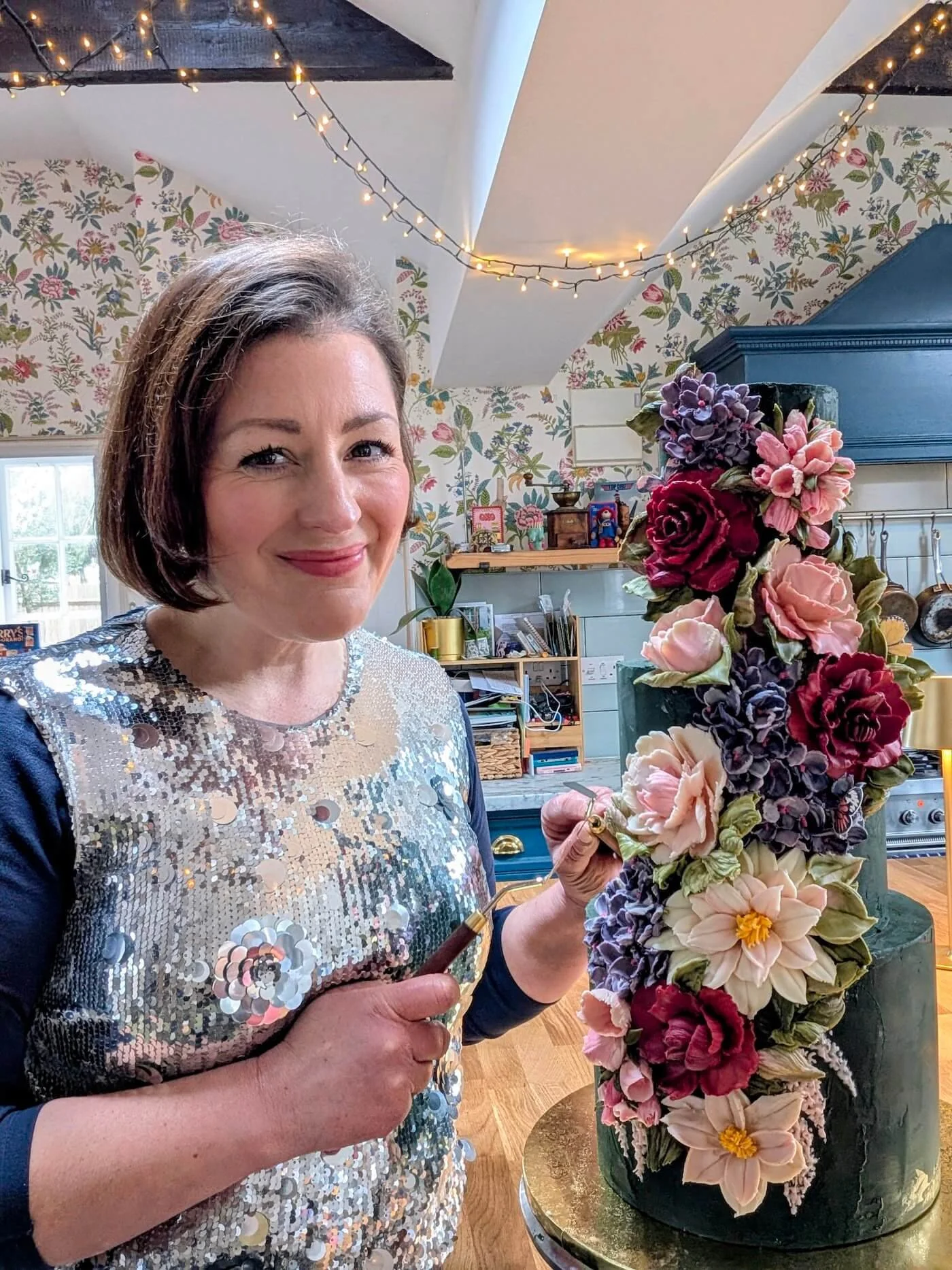
Think about the season
The time of year you’re getting married should quietly influence your wedding cake flavours, in the same way it influences your flowers, your menu, and the feeling of the day itself.
A July wedding calls for something different from a November one. Light, bright, floral flavours like lemon and elderflower or champagne and rhubarb feel completely right in the middle of summer, when the air is warm and the meal that preceded the cake was probably fresh and seasonal. They’re a continuation of the mood.
In autumn and winter, richer flavours come into their own. The warmth of Persian Love Cake with its cardamom and pistachio. The depth of dark chocolate and tahini. Neopolitan ice cream as a wedding cake flavour, which sounds playful until you taste it and realise it’s one of the most sophisticated things you’ve ever eaten. These are flavours that suit candlelight, log fires, and the particular cosiness of a winter wedding.
This isn’t a rule, and I’d never discourage a couple from choosing whatever they love. But seasonality is one of those details that makes a wedding feel considered – as though every element was chosen with the same care – and your cake flavours are a surprisingly easy way to get that right.
Think about what comes before the cake
Your wedding cake doesn’t arrive in isolation. It follows a meal – sometimes a three-course dinner, sometimes a barbecue, sometimes canapés and a buffet – and the flavours you choose should sit well alongside what your guests have already eaten.
This doesn’t mean you need to plan your cake around your menu in forensic detail. But it’s worth thinking about the overall direction. If your wedding breakfast is rich and hearty, serving a lighter cake flavour gives your guests’ palates somewhere to go. Lemon and elderflower after a rich main course is a joy. Triple chocolate after a chocolate fondant dessert might be one chocolate too many.
Equally, if your meal is light and fresh – a summer menu built around fish and salads – you have more room for indulgence in the cake. That’s when the chocolate tiers and the richer Silk Road flavours really sing.
If you’re not sure, this is exactly the kind of thing we’d talk about in your consultation. I love this part of the process and understanding the whole shape of your day to make sure the cake fits beautifully within it.
Catering for your guests
Weddings gather people with different tastes, different ages, and different appetites. Your cake flavours are an opportunity to be generous about that.
Having a mix of flavours across your tiers is the simplest way to make sure there’s something for everyone. A classic flavour like vanilla or lemon alongside something more adventurous like almond, saffron and blood orange means your most traditional guests and your most adventurous ones are equally well looked after. Nobody is left out, and nobody is bored.
Dietary requirements are worth mentioning here too. All of my cake flavours are made with real French butter, free-range eggs, and no artificial anything – but some flavours are naturally free from certain allergens, and I’m always happy to discuss options if you have guests with specific needs. It’s one of the benefits of working with a cake maker who makes everything from scratch: nothing is off-the-shelf, so everything can be considered.
The case for being adventurous
I notice something interesting when couples order tasting boxes. They almost always include one or two “safe” choices – vanilla, lemon, chocolate – and then something they’re curious about but slightly unsure of. Persian Love Cake, or dark chocolate and tahini, or the exotic sounding Ispahan, with its rose Italian meringue buttercream and raspberry and lychee preserve. More often than not, the adventurous choice is the one that ends up on the cake.
There’s a reason for this. Your wedding cake is not a birthday cake. It’s not something you’re buying to please the broadest possible audience with the least possible risk. It’s a bespoke commission – a piece of edible art designed around your taste and your story. The flavours should reflect that. They should feel like something you chose with intention, not something you defaulted to because it seemed safe.
The couples I work with tend to be people who care about food. They’ve chosen their caterer carefully, thought about the wine, considered the canapés. The cake should be no different. If you love cardamom, put cardamom in your wedding cake. If tahini makes you weak at the knees, that’s your tier sorted. If the idea of a Neapolitan ice cream cake at a black-tie wedding makes you laugh with delight – that’s the one. That reaction is everything.
Trust yourself
The most useful thing I can tell you about choosing your wedding cake flavours is this: trust your own taste. You don’t need to second-guess what your guests will like, or worry about choosing something too unusual, or stick with vanilla because it feels expected.
Your guests are coming to your wedding because they love you. They’re going to eat your cake because you chose it. And if you chose it because it made you close your eyes and reach for a second forkful, they’re going to love it too.
That’s what a tasting box is for. Not to test flavours in the abstract, but to sit down with the people whose opinions matter to you, taste six different options, and watch yourself gravitate toward the ones that feel right. The ones that feel like your wedding. Autumn x